

This Coinbase review for Canadians has a short answer: Coinbase is safe and legal for Canadians, and it is my number one pick at 9.8 out of 10. Coinbase Canada, Inc. is a Restricted Dealer under the Canadian Securities Administrators in every province and territory, it holds FINTRAC money services business registration M22815925, and it is not on the CSA banned list. You can add CAD free by Interac e-Transfer or EFT. The catch is cost: simple buys carry a spread plus a Coinbase fee of up to 1.875%, so it rewards beginners more than active traders.

- Best ForFirst-time buyers who want a regulated, simple app
- Trading FeeUp to 1.875% on simple buys, plus spread
- CAD FundingFree Interac e-Transfer and EFT
- Coins200+
- App Store (Canada)4.6 / 5 from 65,030 ratings
- Google Play4.4 / 5 from 929K reviews
| Detail | What I Found |
|---|---|
| Legal Entity | Coinbase Canada, Inc., a British Columbia corporation |
| Regulation | CSA-registered Restricted Dealer in all provinces and territories. Decision April 3, 2024, amended April 1, 2026 |
| FINTRAC MSB | Coinbase Canada, Inc. M22815925, registered, expires March 6, 2027 |
| CIRO Member | No. It operates as a CSA Restricted Dealer. Fiat balances are not protected by CIPF |
| My Score | 9.8/10, ranked #1 |
| Simple Buy And Sell Fees | A spread (shown in the order preview) plus a Coinbase fee that can be up to 1.875% depending on payment method |
| Limit Orders | A separate 1% execution fee applies on simple limit orders |
| Advanced Trade Fees | Coinbase says it lowered Advanced spot fees. The Canadian rate table is not published where I could verify it, so I do not quote a rate |
| CAD Funding | Interac e-Transfer free, EFT free, wire, 3D Secure card, PayPal |
| Coins | 200+ assets on coinbase.com/en-ca |
| Staking | ETH, ADA, SOL, ATOM and XTZ, up to 10% APY shown, 35% standard commission |
| App Ratings | Apple Canada 4.56 across 65,030 ratings. Google Play 4.4 across 929K reviews (global) |
| Sign-Up Banner | "Get up to CA$200 for getting started" on its Canadian site. I could not verify the terms, so I do not promise it |
How Can You Check That Coinbase Is Registered?
Do not take my word for it. These are the official registers, with what they showed for Coinbase when I checked them for this review.
| Register | Result | Verify |
|---|---|---|
| CSA list of authorized crypto platforms | Listed: Coinbase Canada Inc., Crypto Asset Trading Platform. | Check the CSA list |
| CIRO dealer member | No | Check CIRO’s list |
| FINTRAC money services business | Registered, M22815925 | Search FINTRAC’s registry |
Is Coinbase Legit And Safe For Canadians In 2026?
Yes. Coinbase Canada Inc. is one of the most regulated crypto platforms available to Canadians. It holds CSA Restricted Dealer status across all provinces and territories, FINTRAC registration M22815925, and is not on the CSA banned list. Coinbase's own security page says it holds customer assets 1:1 and does not lend them without permission.
Two limits are worth knowing. Coinbase is not a CIRO member, so it does not carry the investment-dealer status that Newton and NDAX hold. And its user agreement says Canadian fiat wallets are not covered by CIPF or CDIC. Assets are custodial, held in omnibus accounts at Coinbase, Inc. or Coinbase Custody Trust Company. The Canadian pages give no insurance dollar figure, so I do not quote one.
I started using Coinbase in 2016 when there were almost no Canadian crypto options. Back then you used Coinbase because there was nothing else. Today there are better-priced options for Canadians, but Coinbase's institutional standing is hard to match. It joined the S&P 500 on May 19, 2025, which puts it among the largest listed US companies and under the scrutiny that comes with that. That is a different kind of safety from a small domestic exchange, and it is part of why I still rank it first.
One thing I want to be honest about that most Coinbase reviews skip: the May 2025 data breach. Overseas support staff were compromised by cybercriminals and used to access customer data. Coinbase's own filing with the US securities regulator lists names, addresses, phone numbers, emails, government ID images, masked bank details, account balances and transaction histories, and says the compromised staff could not access customer funds. Coinbase estimated remediation and reimbursement costs at $180 million to $400 million. Canadians should be aware of this. It did not touch customer funds, but it is a real event.
Coinbase refused to pay the extortion demand and disclosed the breach publicly instead. Affected users were notified, and Coinbase increased security monitoring and restricted contractor access afterwards. This was a significant event and the most notable negative development in Coinbase's history, though the financial security of user funds was not compromised.
Beyond the minimum, here is what Coinbase gives you to protect an account:
- 2FA for all users, with hardware keys (YubiKey), authenticator apps, SMS, passkeys and biometrics all supported
- Withdrawal address allowlisting to restrict where funds can go
- Customer assets held 1:1 and not lent out without your permission, according to Coinbase's own security page
My advice is to switch on a hardware key or an authenticator app on day one and turn on the address allowlist before you ever withdraw. SMS-only protection and a reused password are the weakest links on any exchange account.
Is Coinbase Legal And Available In Canada?
Yes. The CSA list of platforms authorized to do business with Canadians shows Coinbase Canada Inc. with a Decision on April 3, 2024 and an Amended Decision on April 1, 2026. Coinbase appears nowhere on the CSA banned list. If a site tells you Coinbase is blocked in Canada, it is out of date.
What Is Coinbase's Track Record And What Changed In 2026?
Coinbase was founded in 2012, went public on NASDAQ in April 2021, and now serves Canadians through a locally registered entity. The big Canadian milestones came through the CSA process, ending with Restricted Dealer status in April 2024. For Canadians, the key developments between 2024 and 2026 are full CSA Restricted Dealer registration, a refreshed CSA decision in April 2026, and Advanced Trade replacing the old Coinbase Pro inside the same account.
Coinbase Canada Key Milestones
| When | Milestone |
|---|---|
| 2012 | Founded in San Francisco by Brian Armstrong and Fred Ehrsam |
| 2016 | Canadian market entry, the year Oleg opened his own account |
| April 2021 | Listed on NASDAQ (COIN), the first major crypto company to list in the US |
| December 2022 | Coinbase Canada, Inc. receives its first FINTRAC money services business approval |
| 2022 to 2023 | Pre-Registration Undertaking process with the CSA. Interac e-Transfer deposits introduced for Canadians |
| April 3, 2024 | CSA Restricted Dealer decision covering all Canadian provinces and territories |
| 2024 | Advanced Trade replaces Coinbase Pro. Same account, no separate sign-up, a much cleaner experience |
| May 2025 | Coinbase joins the S&P 500. Separately, the data breach through bribed overseas contractors is disclosed |
| December 2025 | Coinbase, Inc. registers with FINTRAC as a money services business |
| April 2026 | CSA publishes an Amended Decision for Coinbase Canada Inc. |
| September 2026 | Derivatives launch for eligible Canadian investors only, not retail |
What Changed For Coinbase In October 2026?
- : The CSA published an Amended Decision for Coinbase Canada Inc.
- : Coinbase launched regulated crypto derivatives for eligible Canadian investors through Coinbase Financial Markets. Press reports limit this to qualified clients, not retail.
- : Coinbase announced lower Advanced spot fees and lower volume thresholds. The announced rates named the US, EU and UK, not Canada.
- : Coinbase, Inc. registered with FINTRAC as a money services business alongside the Canadian entity.
How Do You Sign Up And Verify On Coinbase Canada?
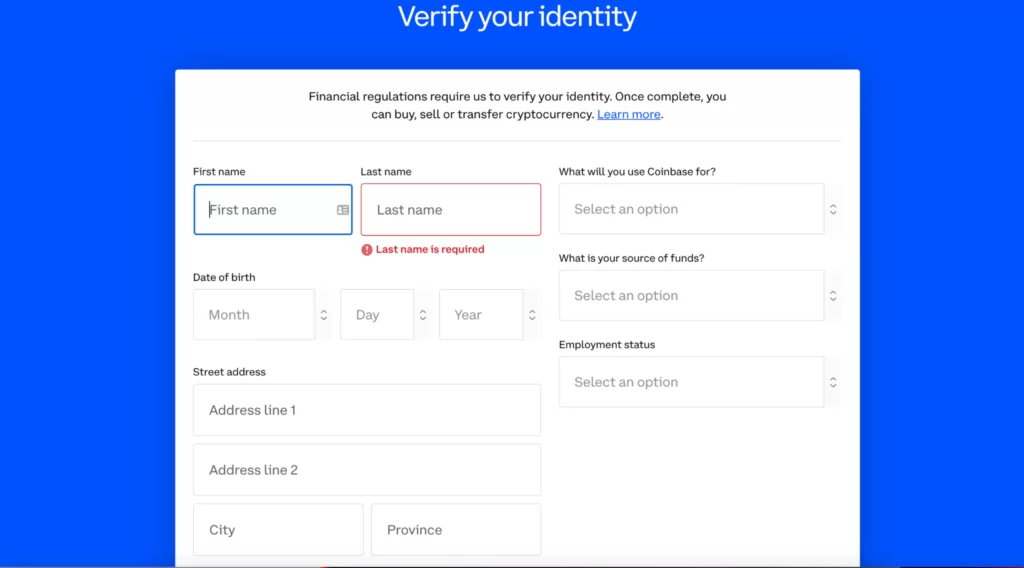
Sign-up takes about 10 minutes. You need to be 18 or older, a Canadian resident, and provide a government-issued photo ID. Coinbase also asks about your investing experience, risk tolerance and financial situation, as required by Canadian regulators. Most accounts are verified within minutes, and two-factor authentication is set up during onboarding.
- Email address and password
- Phone number for SMS verification
- Government-issued photo ID (driver's licence or passport)
- Full name, address and date of birth
- Source of funds information
- Investor questionnaire required by Canadian regulations
The investor questionnaire is a Canadian regulatory requirement, not a Coinbase preference. Under CSA guidelines, Coinbase must confirm that crypto investing is appropriate for each Canadian client based on their answers. Depending on your responses, certain limits or restrictions may apply to your account.
One practical note for Canadians: make sure your legal name on Coinbase matches your bank account exactly before trying Interac deposits. Even a small variation, such as a shortened first name or a middle name included on one but not the other, can cause Coinbase's system to reject the transfer. This is the most consistently reported onboarding problem for Canadian users. Getting it right upfront saves a frustrating support conversation later.
Coinbase Sign-Up Step By Step
- Go to the Canadian site, create your login with an email address and a password you do not use anywhere else.
- Confirm your phone number with the SMS code, then set up two-factor authentication in the same flow.
- Enter your full legal name, address and date of birth exactly as they appear on your bank account.
- Upload your driver's licence or passport and take the selfie check if prompted.
- Answer the source of funds and investor questions honestly, because your answers set your account limits.
- Add a payment method, start with Interac e-Transfer, and place a small first buy to see the order preview before you commit real money.
How Do Canadians Add Funds To Coinbase?
| Method | Fee | Notes |
|---|---|---|
| Interac e-Transfer | Free | Adds cash and cashes out. You cannot buy directly with it, you add cash first |
| Bank Account (EFT) | Free | Credited instantly, with a hold period before you can send or withdraw. Can buy directly |
| Wire Transfer | Not published | Add cash only, 1 to 3 business days |
| 3D Secure Card | Not published | Buy only, instant |
| PayPal | Not published | Buy and cash out |
Coinbase does not publish minimums or maximums for these methods, so your bank's limits apply. Interac e-Transfer is the cleanest on-ramp for most people. Cards and PayPal are convenient, but the fee is not published, so check the quote before you confirm and never assume PayPal is free. On cash-outs, Interac e-Transfer and EFT are supported, and Coinbase says only that you may be charged a fee depending on the payment method. Check the screen before confirming.
Interac E-Transfer (Recommended)
Free and fast. Coinbase does not publish a minimum or maximum, so your own bank's e-Transfer limits are the ceiling. Critical: your legal name on your bank account must match your Coinbase profile or the deposit can be rejected. Set this up correctly the first time and Interac is the cleanest CAD on-ramp on the platform. Remember the order of operations: you add cash by Interac first, then you buy with that balance.
EFT (Electronic Funds Transfer)
Free, and it links directly to your Canadian bank account. Coinbase credits the balance instantly and can buy with it directly, but it holds the funds for a period before you can send them out or withdraw them. That makes EFT a good fit for larger deposits you can plan ahead, because the hold is the cost of the speed.
PayPal
PayPal is supported for buying and cashing out. Coinbase does not publish a fee or a limit, and I do not call it free. Some accounts see inconsistent PayPal approval until a transaction history exists on the new link. If PayPal transactions fail without explanation, give it a few days and try again. That is usually a PayPal security system issue, not a Coinbase problem.
Debit And Credit Card
Cards use 3D Secure, are instant and are buy-only, but they are the expensive way in. Coinbase does not publish the card fee on its Canadian pages, so read the quote line on the order screen before you confirm. Use Interac instead in every situation where you can wait a few minutes. Cards are only appropriate for urgent small purchases where cost is secondary to speed, and never for a large buy.
CAD Withdrawals
Sell your crypto and withdraw CAD to your bank by Interac e-Transfer or EFT. PayPal is also available for cash-out. Coinbase says only that you may be charged a fee depending on the payment method, and users have reported a fee on some Interac withdrawals. Verify the current withdrawal fee in your account before you assume it is free.
Coinbase Fees In Canada: What Do You Really Pay?
Coinbase has two parallel fee systems inside one account. Simple buy and sell charges a spread built into the price, plus a Coinbase fee. Coinbase's official Canadian fee disclosure says it "may also charge a 1.875% Coinbase fee (varies by payment method)", and a separate 1% execution fee applies on simple limit orders. Advanced is the lower-cost route, and Coinbase says it lowered Advanced spot fees, but the Canadian rate table is not published where I could verify it, so I leave out a number rather than repeat a rate I cannot source.
Simple Trade Versus Advanced Trade: Where The Money Goes
The two fee systems differ enormously, and most beginners never learn there are two. The simple interface is built for three taps and charges accordingly. Advanced is inside the same free account, with a maker-taker fee structure instead of a spread-plus-fee structure, and Coinbase has said it cut those fees in 2026. Switching to Advanced is the single most impactful action any Canadian Coinbase user can take to reduce costs, as long as you learn to use limit orders.
One catch to check in your own app: if Advanced shows USDC pairs rather than CAD pairs for your account, the route is to buy USDC on the simple screen first, then trade USDC for Bitcoin or Ethereum on Advanced. That adds one step, but it lowers the cost of every later trade.
Advanced Trade Fee Tiers
Advanced fees drop as your 30-day trading volume rises, which is the standard maker-taker model. The Canadian rate table is not published where I could verify it, so I will not paste a tier table I cannot source. Open the fee page inside your account to see the tier you are in, and treat any blog quoting exact Canadian tiers with caution, including old versions of this one.
| Cost Item | On A CAD 1,000 Buy |
|---|---|
| Coinbase Fee (Up To 1.875%) | Up to CAD 18.75 |
| Limit Order Execution Fee (1%) | CAD 10.00, simple limit orders only |
| Spread | Built into the price. Shown in the order preview, amount not published |
The practical advice is the same I gave in my last version of this review: look at the order preview before you confirm, compare the total with the market price, and consider Advanced for regular purchases. The all-in cost on simple buys is the part that surprises people.
Coinbase One: The Paid Subscription
Coinbase One is Coinbase's paid membership. In its tiers, the subscription removes the Coinbase fee on simple trades up to a monthly volume, lowers the staking commission and adds faster support. I could not verify the Canadian tier prices or caps on an official page, so check the subscription screen in your account before you pay for anything.
One important note: Coinbase One removes the transaction fee on simple trades, but the spread embedded in the price still applies. The subscription is primarily worth it for the lower staking commission and priority support, not as a complete fee elimination. For most regular buyers, Advanced without a subscription already beats simple trading with a lower-tier subscription.
How Do You Withdraw From Coinbase To A Canadian Bank Account?
Sell the coins you want to cash out, then use the Cash Out option in the app and pick Interac e-Transfer or EFT to your own bank account. PayPal also appears as a cash-out route. Coinbase's fee page says only that you may be charged a fee depending on the payment method, so I will not give you a number. Check the fee shown on the confirmation screen before you submit.
Two things slow people down. Funds added by EFT are credited instantly but carry a hold period before you can send or withdraw them, and your legal name on Coinbase has to match the name on the bank account. If you plan to move coins out instead, a network fee applies at send time, and Lightning sends carry a 0.2% processing fee.
Does Coinbase Report To The CRA?
I did not find an official Coinbase statement that spells out exactly what it reports to the CRA, so I will not guess. What I can say is firm: Coinbase Canada is a FINTRAC-registered money services business and follows Canadian identity and anti-money-laundering rules, and you are responsible for reporting your own gains whatever Coinbase sends or does not send.
The CRA says to keep records of every sale, trade, spend and reward, and export your transaction history from the platform regularly. Draft federal legislation published in August 2025 proposes crypto-asset reporting by platforms from 2028, but that is a proposal, not a rule you can rely on today. My guide to reporting crypto on your tax return walks through Schedule 3.
How Does Coinbase Make Money?
Coinbase earns revenue through the spread and fee on simple trades, trading fees on Advanced, the commission on staking rewards, subscription products and institutional services. For Canadian users, the simple-trade spread and the staking commission are the main ones. The spread is built into the price you see, not shown as a separate line item, so the quoted price is already a little worse than the market price.
The most important thing for Canadians to understand about Coinbase's fee model is that the spread on the simple screen is built into the price you see, not shown as a separate line. When you click Buy Bitcoin, the price quoted is already worse than the market price. The Coinbase fee shown separately sits on top of that, so the total all-in cost is the spread plus the transaction fee. That structure is what makes simple trading more expensive than it looks at first glance, and why switching to Advanced matters so much for cost-conscious Canadians.
What Features Does Coinbase Offer Canadians?
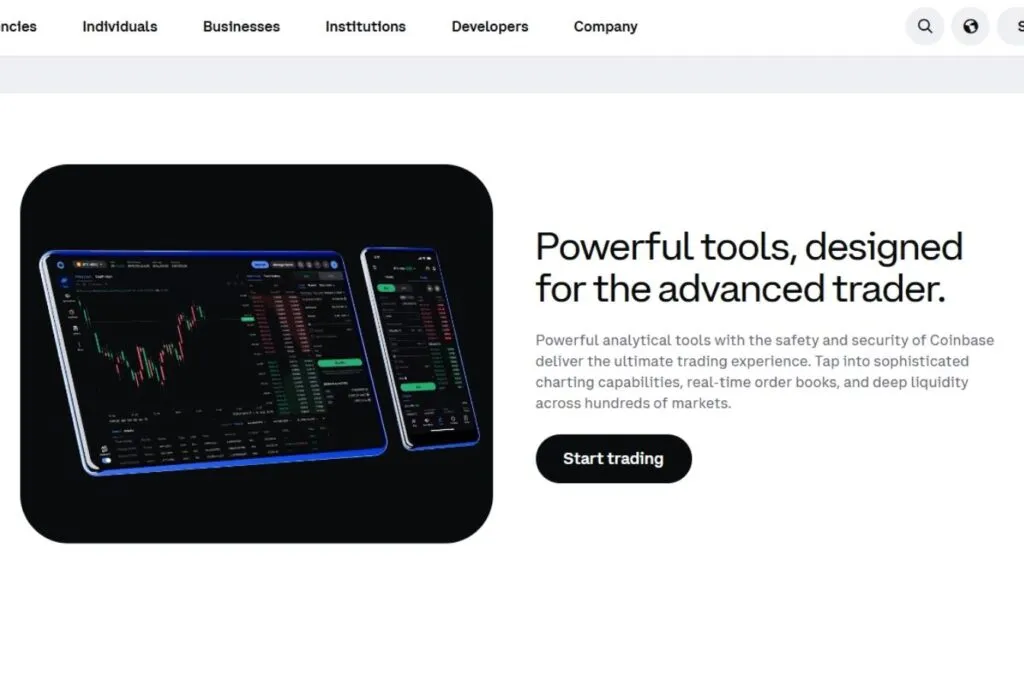
Coinbase offers a simple buy and sell screen for beginners and Advanced for experienced traders (charts, limit and stop-limit orders, an order book). They are two views inside the same account, with no separate registration. Toggle between them in the app or on the web, and there is no extra cost to open Advanced. It also has 200+ assets, staking, a separate self-custody wallet app and a well-organized help centre.
Which Coins Can You Buy On Coinbase Canada?
Coinbase's Canadian site says you can trade 200+ assets. That covers the majors such as Bitcoin, Ethereum, Solana, XRP, Cardano, Polkadot, Avalanche, Polygon (POL), Litecoin, Dogecoin, Chainlink and Shiba Inu, plus many altcoins that Canadian-native exchanges skip. Many of those are tokens you will not find on Canadian-native exchanges like NDAX or Newton. Some coins available globally are province-restricted in Canada because of CSA requirements, so check in-app for what you can buy where you live. See my guide to buying altcoins in Canada.
Can Canadians Stake On Coinbase?
Yes. Coinbase's Canadian site says you can stake ETH, ADA, SOL, ATOM or XTZ for up to 10% APY in eligible jurisdictions, with a standard 35% commission on rewards. The experience itself is simple: deposit the asset, rewards accrue automatically and there are no manual steps. Most assets have no long lock-up, and unstaking early can cost a fee unless you wait out the full unbonding period. The honest caveat is the commission. Coinbase's 35% cut of staking rewards is the highest among the Canadian platforms I have compared. The APY shown in your account is already net of the commission, so what you see is what you get, but the gross protocol rate is meaningfully higher. Compare that with the 20% administration fee at NDAX and the 30% Wealthsimple charges on staking rewards for Core and Premium clients. Read crypto staking and taxes in Canada before you stake.
Can You Earn Rewards On USDC At Coinbase?
Coinbase has run a USDC rewards program, and where it is shown in your account the idea is simple: hold USDC, accrue rewards, and sell, send or convert it whenever you like. The rate moves with the market and I could not verify a Canadian figure on an official page, so read the rate shown in your app instead of any number in a review. An older version of this article quoted a headline rate that is no longer accurate, which is exactly why I stopped printing rates that change.
What Is The Coinbase Wallet?
A separate self-custodial wallet application, distinct from the main Coinbase exchange. The Base App is now the standalone wallet experience, with the Coinbase Wallet name transitioning to Base branding. If you want to hold crypto in true self-custody while still using Coinbase for purchases, this is the route. My guide to crypto wallets for Canadians compares the options.
What Is Learn And Earn?
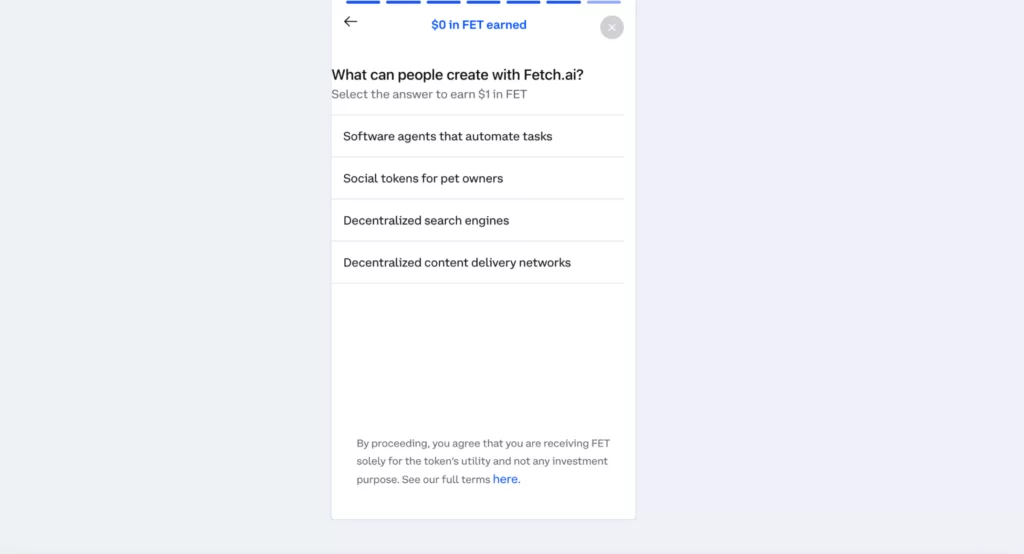
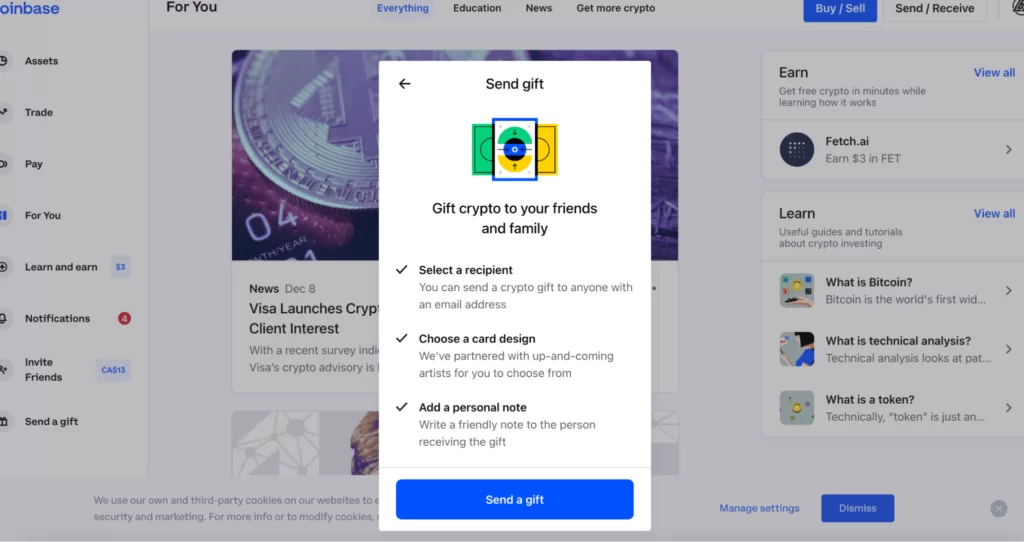
You watch short educational videos about specific cryptocurrencies and answer quiz questions to earn small amounts of that crypto. It is a genuine way to build a first small position while learning, and the quiz questions are straightforward. Availability depends on your region and the current campaigns, so look for it in the app.
What Is Not Available To Canadians?
- Retail derivatives: Coinbase launched futures for eligible Canadian investors on September 2, 2026, but reports limit it to qualified clients. There is no retail leverage.
- Interac purchases: you add cash by Interac e-Transfer first, then buy.
- Coinbase Card: the Visa debit card that earns crypto cashback in the US is a US product. For a crypto cashback card in Canada, look at my Shakepay review.
- Borrowing and lending: the bitcoin-backed loans offered in the US are not part of the Canadian product.
How Does Coinbase Compare To Other Canadian Exchanges?
| Exchange | Score | Trading Cost | Coins | Regulation |
|---|---|---|---|---|
| Coinbase | 9.8 | Spread plus up to 1.875% fee on simple buys | 200+ | CSA Restricted Dealer |
| Kraken | 9.2 | Pro 0.40% maker, 0.80% taker at base tier. Instant buy 1% plus spread | About 500 tickers | CSA-registered |
| Wealthsimple Crypto | 8.4 | 0.5% plus spread, or Active Trader from 0.5% down to 0% | 170+ | CSA-registered |
| Newton | 7.9 | Spread 1.00% to 1.60% | 59 CAD pairs | CIRO investment dealer |
| NDAX | 7.8 | 0.20% flat | 77 base assets | CIRO investment dealer |
Coinbase wins on brand trust, ease and coin selection among beginner apps. It loses on cost to flat-fee exchanges. Which is better, Coinbase or Wealthsimple? Wealthsimple suits you if your savings, TFSA and RRSP already live there. Coinbase suits you if you want the wider coin list and the clearest guided experience. My full rankings have the rest.
Coinbase wins on coin selection among beginner-friendly regulated Canadian exchanges, on institutional credibility and on brand recognition that makes it easier for new users to trust the platform. It loses on fees against Canadian-native alternatives, and several features available globally are missing for Canadians. Here is how I match each platform to a type of user:
- Coinbase: beginners, first-time crypto buyers and anyone who wants the widest coin menu in an easy app
- NDAX: cost-focused traders, altcoin stakers and regular DCA buyers
- Newton: altcoin buyers who want a regulated platform with a simple app
- Kraken: experienced traders who want a deep coin list and pro-style order types
- Shakepay: Bitcoin beginners who want a cashback card
- Wealthsimple Crypto: people who already hold their savings, TFSA and RRSP there
What Is The Downside Of Coinbase?
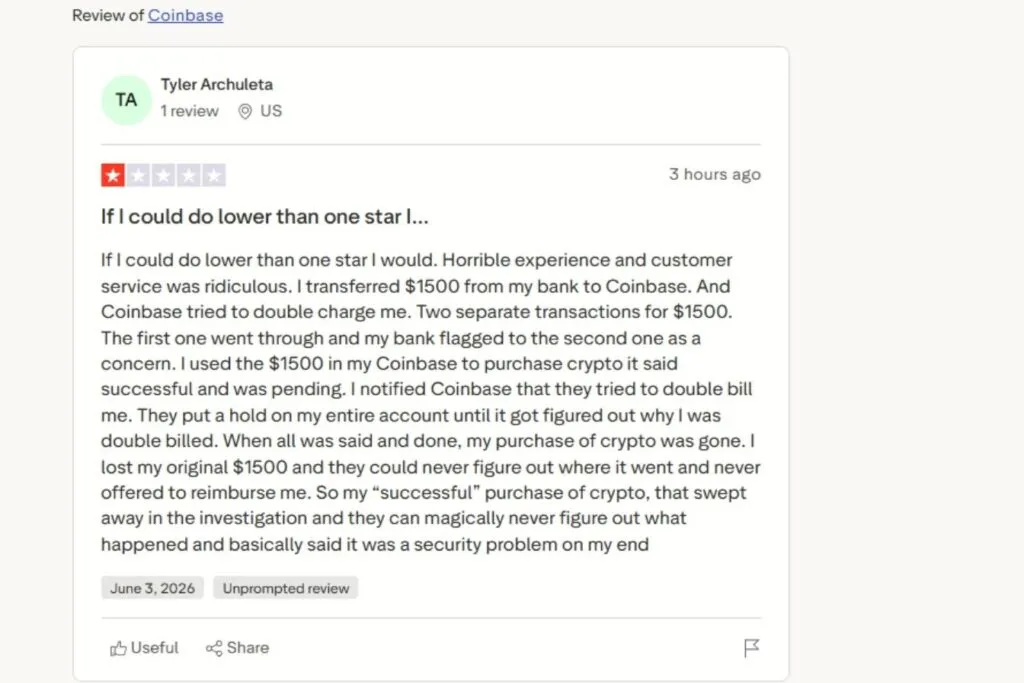
The day-to-day experience for most users is positive. The painful cases involve compliance holds that can freeze access to your assets, and a share of one-star reviews on public review sites concentrates around account freezes, verification delays, fund access holds and support quality when things go wrong. Here are the complaints I think matter most for Canadians.
Account Freezes And Access Holds
This is the most serious complaint pattern. Coinbase's compliance system can flag accounts for identity re-verification, large or unusual transactions, or activity that does not match your stated investor profile. While an account is flagged, buying, selling and withdrawing can be suspended until the review ends. Several user reviews describe holds lasting months. As a CSA-regulated Canadian dealer, Coinbase has AML and KYC obligations that require these checks. That explains why they happen, but it does not make them less frustrating when you are trying to reach your own funds.
Interac Name Mismatch Rejection
The most common practical complaint specific to Canadian users. If the legal name on the sending bank account does not match the name on your Coinbase profile, Interac deposits can be rejected, and there is little warning before it happens. The solution is simple: verify that your name matches before your first deposit. Many users only discover the mismatch after waiting for a deposit that never arrives, so make sure this is correct at setup.
Customer Support For Account-Level Issues
Coinbase offers live chat, email, phone support for some members and an extensive help centre. For routine questions the experience is acceptable. For account-level holds, the pattern documented in reviews is template responses, multiple verification requests and extended timelines before resolution. Paid-tier members get faster phone support, which changes the experience for complex issues. For standard accounts, plan for slow resolution on anything that involves compliance review.
May 2025 Data Breach
Overseas contractors were bribed to access customer data, and names, addresses, emails, phone numbers and government ID images were exposed. No funds were stolen. Coinbase refused to pay the extortion demand and publicly disclosed the breach. Affected users were notified, and Coinbase increased security monitoring and restricted contractor access following it. It is the most notable negative development in Coinbase's history, though the security of user funds was not compromised. Expect phishing aimed at anyone whose details were exposed.
High Standard App Fees
Many users report feeling surprised by fees after trading. The simple screen shows the total before you confirm, but the combination of spread plus transaction fee is genuinely high compared with flat-fee Canadian alternatives. The fix is moving to Advanced and using limit orders. Most users who only ever touch the simple interface pay meaningfully more than they need to.
Scam Awareness
Coinbase impersonation scams are common: fake support agents, phishing sites and spoofed phone calls. Coinbase will never call you unsolicited to help secure your account or ask you to move funds. Use the official app or coinbase.com/en-ca. See common crypto scams in Canada.
How Is Coinbase's Customer Support For Canadians?
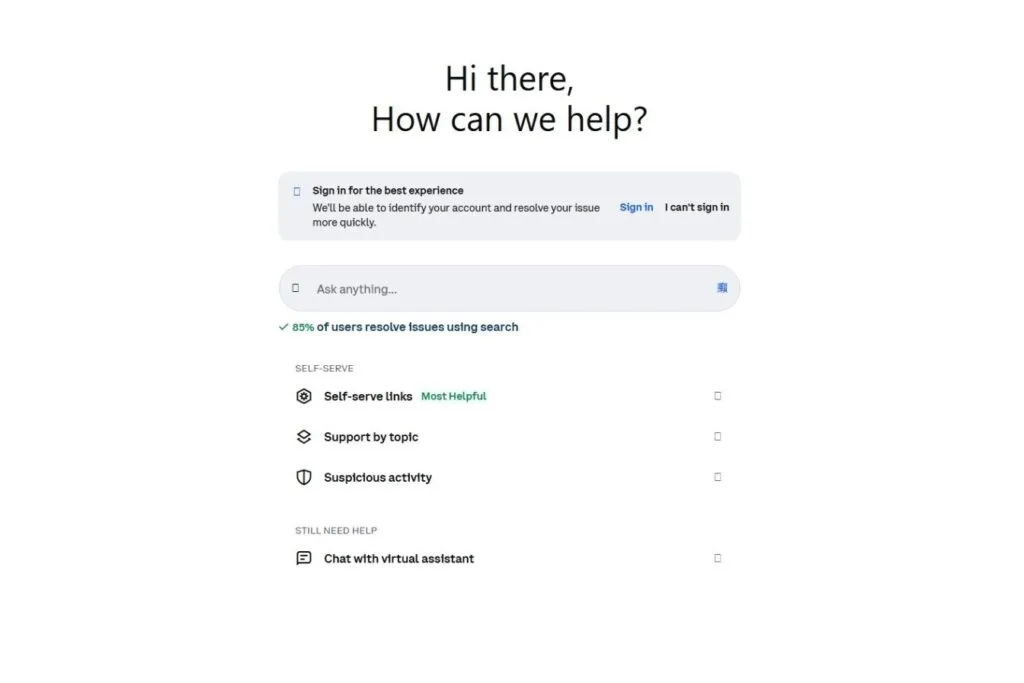
Coinbase offers live chat, email, phone support for some members and an extensive help centre. The help centre resolves most routine questions without a human agent. For account holds, verification issues or fund access problems, response quality and speed are the most consistent complaints in user reviews. A dedicated phone line on a paid tier is a meaningful improvement over the standard queue for anyone who needs reliable human assistance.
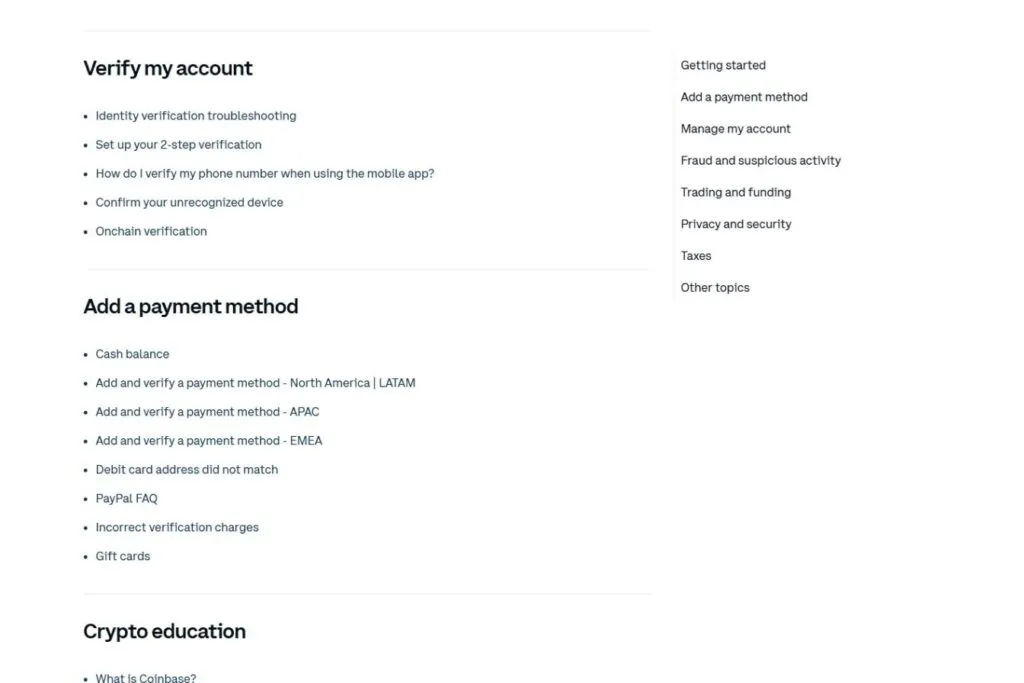
In my own testing, Coinbase's support for general questions is adequate. The help centre at help.coinbase.com is well organized and covers the vast majority of Canadian-specific questions, including Interac setup, verification requirements and regulatory restrictions. When issues reach compliance review, the timeline and communication quality decline sharply.
What Are Coinbase's Pros And Cons?
Pros
- Best beginner experience of any exchange I tested for Canadians
- 200+ assets, a wide menu for an easy-to-use regulated app
- CSA Restricted Dealer in every province and territory, with FINTRAC registration
- Free Interac e-Transfer and EFT
- Staking on several major coins
- A well-organized help centre
Cons
- Simple-trade cost is spread plus a fee of up to 1.875%
- 35% standard staking commission
- Not a CIRO member, and fiat is not CIPF-protected
- No retail futures or leverage in Canada
- Account holds can last a long time
- May 2025 breach exposed customer data
Who Should Use Coinbase Canada?
Coinbase is the best starting point for Canadians buying crypto for the first time who want the clearest, safest-feeling experience backed by the most recognizable brand in the industry. It is not the right choice for cost-focused traders, Canadians who need futures or margin, or anyone frustrated by the fee gap between what they pay and what regulated Canadian alternatives charge.
Coinbase Is A Good Fit If You
- Are buying Bitcoin, Ethereum or altcoins for the first time and want the most guided experience
- Want a large coin selection in a regulated Canadian account
- Value a well-known brand and a Canadian entity registered with the CSA
- Plan to use Advanced for regular purchases and want to save significantly on fees versus the simple screen
- Value brand recognition and institutional credibility: NASDAQ-listed and a long-standing public company
- Want to pay with PayPal or a card in a pinch
Coinbase Is Not The Right Choice If You
- Want the lowest trading cost. NDAX charges a flat 0.20%
- Need futures or margin as a retail trader
- Want lower staking commission. NDAX takes 20%
- Want a crypto cashback card or bitcoin-backed loans. Try Shakepay
- Want all your investing in one app. Wealthsimple covers stocks, TFSA and RRSP and crypto
Is Coinbase Worth It For Canadians In 2026?
Coinbase is the most recognized crypto exchange in the world and one of the best-regulated platforms available to Canadians. CSA Restricted Dealer status, FINTRAC registration, a NASDAQ listing and public-company audits make it genuinely one of the safest choices for Canadians who prioritize that credential over cost.
The honest limitation: Canadians pay more for that credibility than users of domestic Canadian exchanges. After testing 61 exchanges since 2016, the gap between Coinbase's fee structure and lower-cost regulated Canadian alternatives is real and material over time. The simple-screen fees are high, the 35% staking commission is steep, the Coinbase Card is not available, and neither are retail futures or borrowing. Run the numbers on your own habit: buy CAD 5,000 a month and the 0.20% flat fee at NDAX costs CAD 120 over a year of CAD 60,000 in volume, while the Coinbase fee alone, at up to 1.875%, can reach CAD 1,125 before the spread.
My recommendation: Coinbase is the right starting exchange for first-time buyers who value simplicity and brand safety over optimizing fees. Once you have your first position and understand how crypto works, consider opening a lower-fee regulated account at NDAX or Kraken for regular trading. Many Canadians keep both: Coinbase for the coin selection and the beginner-friendly interface, a lower-fee exchange for ongoing buys where the fee difference compounds.
Open a Coinbase Canada account here. Not sure it fits? Take the exchange quiz or ask in r/OCryptoCanada.
What Are The Best Coinbase Alternatives For Canadians?
If Coinbase's simple-buy fees put you off, the alternatives below are the ones from my ranking that you can actually use. Each has its own head-to-head page with the full numbers.
| Exchange | Score | Fees | CAD Funding | Coins |
|---|---|---|---|---|
| Kraken | 9.2 | Kraken Pro 0.40% maker, 0.80% taker. Instant Buy 1% | Free Interac e-Transfer | About 490 |
| Wealthsimple Crypto | 8.4 | 0.5% plus spread | Free Interac e-Transfer | 170+ |
| Bull Bitcoin | 8.0 | No fee, about 2% spread (not published) | Free Interac, bill pay and wire | Bitcoin only |
| Newton | 7.9 | No fee, spread from 1.00% on BTC | Free Interac, wire and EFT | 59 CAD pairs |
| NDAX | 7.8 | Flat 0.20% | Free Interac and wire | 77 assets |
Wealthsimple is the pick if your TFSA and RRSP already live there. Kraken or NDAX suit regular buyers who care about cost. Coinbase still wins on ease for a first purchase.
- Netcoins vs. Coinbase
- Coinbase vs. Kraken
- NDAX vs. Coinbase
- Newton vs. Coinbase
- Wealthsimple Crypto vs. Coinbase
- Shakepay vs. Coinbase
- Bitcoin Well vs. Coinbase
- Crypto.com vs. Coinbase
How Does Coinbase Compare With Other Exchanges?
Where Do These Facts Come From?
Fees, coin counts, registrations and ratings in this review were checked against these official pages and registers:
- coinbase.com/en-ca/legal/user_agreement/canada
- securities-administrators.ca/crypto-platforms-regulation-and-enforcement-actions/crypto-pl
- securities-administrators.ca/crypto-platforms-regulation-and-enforcement-actions/banned-cr
- ciro.ca/office-investor/dealers-we-regulate
- fintrac-canafe.canada.ca/msb-esm/reg-eng.xlsx
- coinbase.com/en-ca
- help.coinbase.com/en/coinbase/getting-started/add-a-payment-method/payment-methods-for-can
- help.coinbase.com/en-ca/coinbase/trading-and-funding/pricing-and-fees/fees
- coinbase.com/en-ca/advanced-trade
- api.exchange.coinbase.com/products
- coinbase.com/en-ca/blog/coinbase-launches-derivative-contracts-in-canada
- cryptotimes.io/2026/09/03/coinbase-launches-23-crypto-futures-in-canada-with-up-to-10x-lev
How I test and score exchanges: my methodology.
Frequently Asked Questions
Is Coinbase Safe, Legit And Legal In Canada?
Yes. Coinbase Canada, Inc. is a CSA Restricted Dealer in every province and territory with FINTRAC registration M22815925, it appears on the CSA list of authorized platforms (decision April 3, 2024, amended April 1, 2026) and it is not on the banned list. It holds customer assets 1:1. Fiat balances are not covered by CIPF, and a May 2025 breach exposed customer data without touching funds.
How Much Does Coinbase Charge For CAD 1,000?
Simple buys carry a spread plus a Coinbase fee that can be up to 1.875%, so up to CAD 18.75 on CAD 1,000 before the spread. A separate 1% execution fee applies on simple limit orders. Check the order preview, because the spread is built into the price.
What Is The Downside Of Coinbase?
Cost and account holds. Simple-trade fees are high versus flat-fee exchanges, the standard staking commission is 35%, and compliance reviews can freeze access to your assets for a long time. Retail futures are not available in Canada.
How Do Canadians Add Funds To Coinbase?
Interac e-Transfer and EFT are free. Wire, 3D Secure card and PayPal are also supported, but Coinbase does not publish their fees. Your legal name on Coinbase has to match your bank account: a name mismatch is the most common onboarding problem Canadians report, and it can get Interac deposits rejected.
How Do I Withdraw From Coinbase To My Canadian Bank Account?
Sell the coins, then choose Cash Out and pick Interac e-Transfer or EFT to your own bank account. Coinbase says you may be charged a fee depending on the payment method and does not publish the amount, so check the confirmation screen. Funds added by EFT have a hold period before they can be withdrawn.
Does Coinbase Report To The CRA?
I did not find an official Coinbase statement that says exactly what it reports to the CRA. It is a FINTRAC-registered money services business, and you are still responsible for reporting your own gains. Export your transaction history regularly and keep your records. Draft legislation from August 2025 proposes platform reporting from 2028.
What Are The Best Coinbase Alternatives For Canadians?
In my ranking Coinbase scores 9.8, Kraken 9.2, Wealthsimple Crypto 8.4, Bull Bitcoin 8.0, Newton 7.9 and NDAX 7.8. Coinbase has the larger coin list than Wealthsimple. Wealthsimple suits you if your TFSA and RRSP already live there, and NDAX has a flat 0.20% fee for regular buyers. See the full rankings.
Can Canadians Use Coinbase Advanced Trade?
Yes. Advanced is available inside the same Coinbase account and is free to access. Toggle to it from the standard interface in the app or on the web. It offers charting, limit orders, stop-limit orders and a maker-taker fee structure that is cheaper than the simple screen for regular buyers. Check whether your account trades against CAD or USDC pairs before you start.
What Coins Can Canadians Buy On Coinbase?
Coinbase's Canadian site says you can trade 200+ assets, including Bitcoin, Ethereum, Solana, XRP, Cardano, Polkadot, Avalanche, Polygon and many altcoins. This is a wider selection than most beginner-focused regulated Canadian exchanges. Some coins available globally are restricted in specific provinces because of CSA requirements, so verify in the app before assuming a coin is available where you live.
Does Coinbase Have A Visa Card Or A Coinbase One Plan For Canadians?
No. The Coinbase Card, a Visa debit card with crypto cashback, is not available to Canadian residents. If you want a crypto cashback card in Canada, see my Shakepay review, which covers a tiered Bitcoin cashback Visa card available to Canadians.
Coinbase One, the paid subscription, has been offered to Canadians. It removes the Coinbase fee on simple trades up to a monthly volume, but the spread still applies, and I could not verify the Canadian tier prices.